
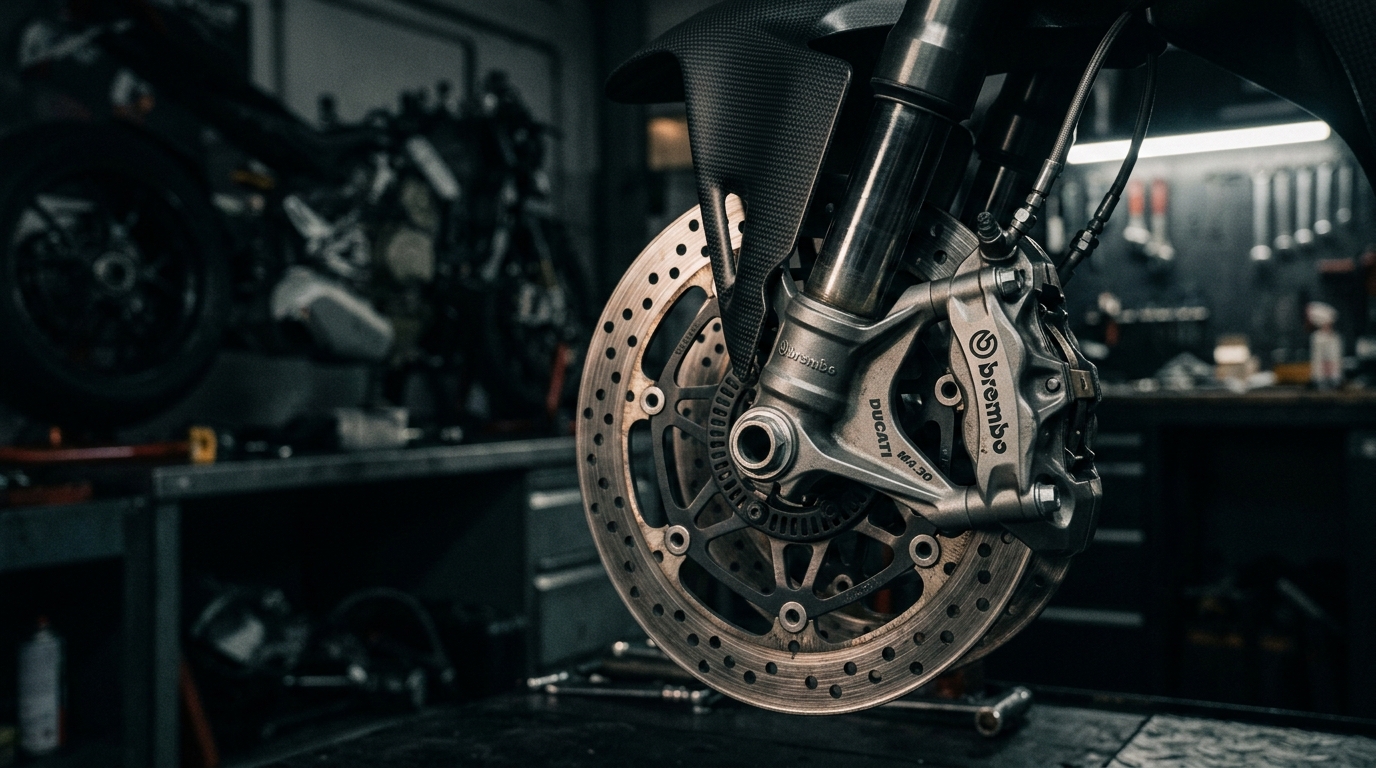
Your motorcycle's braking system is your primary safety feature. Whether navigating unpredictable city traffic or cruising at high speeds on the highway, having responsive, predictable stopping power is vital. Most two-wheelers in India come equipped with either hydraulic disc brakes, mechanical drum brakes, or a combination of both (disc front, drum rear). Over time, heat, friction, moisture, and road dust degrade brake pads, shoes, and hydraulic fluid, diminishing braking efficiency.
Understanding how disc and drum systems operate, recognizing early warning signs of wear, and sticking to routine maintenance intervals will ensure your bike stops safely under any road conditions.
How Disc Brakes Work & Maintenance Requirements
Hydraulic disc brake systems consist of a brake lever/pedal, a master cylinder reservoir filled with hydraulic fluid (DOT 3 or DOT 4), rubber brake lines, a caliper housing internal pistons, friction brake pads, and a steel rotor disc attached to the wheel hub. When you pull the brake lever, the master cylinder forces hydraulic fluid down the hose, pushing caliper pistons outward to clamp the brake pads against the rotating disc.
Disc brakes offer superior heat dissipation, exceptional stopping power, and precise lever feel. However, because disc brake components are exposed, they require regular inspection:
- Brake Pad Thickness Inspection: Check brake pad friction material thickness through the caliper gap. New pads have 4mm to 5mm of material. Replace pads immediately when friction material wears down to less than 1.5mm or reaches the wear indicator groove.
- Brake Fluid Inspection & Replacement: Hydraulic brake fluid is hygroscopic (it absorbs moisture from the air). Over 12 to 18 months, absorbed water lowers the fluid's boiling point, leading to lever sponginess and vapor lock during hard braking. Flush and replace DOT 4 brake fluid every 1.5 to 2 years.
- Brake Bleeding: Air bubbles trapped in the hydraulic line compress under lever pressure, resulting in a squishy, ineffective brake lever. Bleed the brake system using a clear hose and fresh fluid until all air bubbles are purged.
- Rotor Disc Wear & Warping: Inspect the steel rotor disc for deep grooves, lip edges, or heat discoloration (blue spots). Warped discs cause pulsation through the brake lever during braking and require replacement.
How Drum Brakes Work & Servicing Guidelines
Mechanical drum brakes feature an enclosed metal hub containing expanding brake shoes, return springs, an actuating cam, and a steel cable or rod connected to the handlebar lever or foot pedal. Pulling the lever rotates the cam, pushing internal brake shoes outward against the inner drum wall to slow the wheel.
Drum brakes are cost-effective, durable, and sealed from external mud, making them popular on budget commuters and rear wheels. However, their sealed design traps brake dust inside the hub over time, causing reduced braking bite, squealing noises, and sticky lever return:
- Brake Shoe Cleaning & De-glazing: Every 4,000 to 5,000 km, remove the rear wheel, open the drum brake plate, and blow out accumulated carbon brake dust. Sand the shoe friction linings lightly with emery paper to remove hard glazed spots.
- Actuating Cam Lubrication: Clean the brake arm pivot cam pin and apply a thin film of high-temperature grease. Avoid getting grease on the friction linings or drum surface.
- Cable Free-Play Adjustment: Adjust the knurled brake nut on the rear brake arm to maintain 10mm to 15mm of lever free-play. If the adjusting nut reaches the end of the threaded rod, the brake shoes are worn out and must be replaced.
Warning Signs Your Brakes Need Immediate Service
Never ignore changes in braking performance. Watch for these safety indicators:
- High-pitched Metallic Screeching: Indicates brake pad friction material is completely worn away, allowing the metal backing plate to grind directly against the steel rotor disc.
- Spongy or Soft Brake Lever: Caused by air bubbles in the hydraulic brake line or old, water-contaminated brake fluid.
- Severe Handlebar Vibration During Braking: Points to a warped front brake rotor disc or unevenly worn caliper slider pins.
- Bike Pulls or Fails to Roll Freely: Indicates a stuck caliper piston or over-tightened drum brake cable dragging against the wheel.
If you notice lever sponginess, screeching sounds, or weak braking force, do not risk riding to a workshop. Book a doorstep brake repair service with FixWheel, and our verified mechanics will inspect, bleed, or replace your brake pads directly at your doorstep.
Comments0